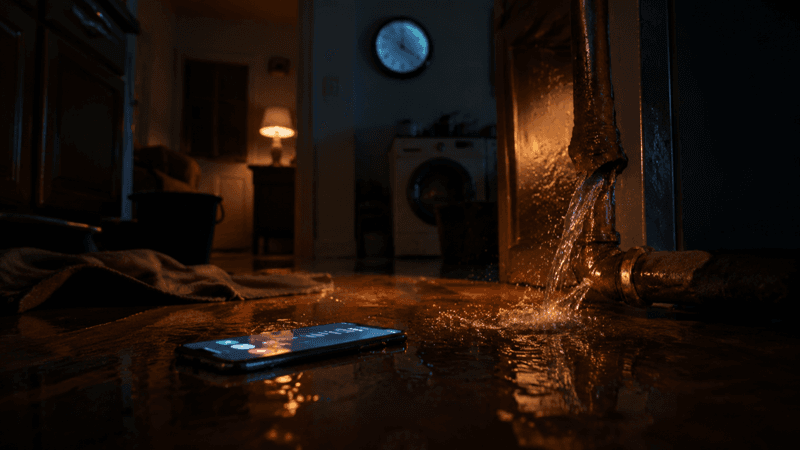
Home service emergencies do not wait for business hours. A pipe bursts at 11 PM on a Tuesday. The furnace dies at 5 AM on a Saturday in January. The AC compressor fails at 7 PM during a July heat wave when the house is 95 degrees and there is a newborn sleeping upstairs. These are the calls that carry emergency premiums of 1.5-2x standard rates — and they are the calls most home service companies send to voicemail.
The After-Hours Revenue Opportunity
Industry data shows that 40-50% of home service calls come in outside standard business hours. For emergency-heavy trades like plumbing and HVAC, that number climbs higher. And after-hours calls are disproportionately high-value: they carry emergency premiums, they are often urgent enough to bypass the "get three estimates" behavior, and the customer is far less price-sensitive when water is flooding their kitchen floor at midnight.
- Standard service call: $250-$500 average ticket
- After-hours emergency call: $375-$1,000 average ticket (1.5-2x premium)
- Emergency calls leading to equipment replacement: $5,000-$15,000
- Customer lifetime value from emergency-to-loyal-customer conversion: $12,000-$25,000
A company sending these calls to voicemail is not just losing the emergency revenue — they are losing the customer relationship that starts with "You answered at midnight when nobody else would."
Home service customers who receive immediate emergency response have a 70% higher rate of signing maintenance agreements and becoming repeat customers — they remember who showed up when it mattered.
Why Traditional After-Hours Solutions Fall Short
Most home service companies handle after-hours calls in one of three ways: voicemail, an answering service, or the owner's personal cell phone. None of these works well at scale.
Voicemail loses 85% of callers immediately — a homeowner with a burst pipe will not leave a message and wait. They will call the next plumber. Answering services take messages but cannot triage urgency, verify service areas, or dispatch technicians. And routing calls to the owner's phone works until the owner is in the shower, at their kid's baseball game, or — ironically — on another emergency call.
How AI Handles the 6 PM to 6 AM Window
AI handles every after-hours call as a full emergency triage and dispatch experience, categorizing calls into three priority levels:
- Emergency (immediate dispatch): Burst pipes, gas leaks, electrical failures, no heat below freezing, no AC above 95 degrees, active flooding, sewage backup. AI dispatches the on-call technician immediately with full job details.
- Urgent (next-morning priority): Water heater failure (no active flooding), intermittent electrical issues, AC struggling but still running, slow drains backing up. AI schedules a first-available appointment and sends the customer a confirmation.
- Standard (next-available scheduling): Maintenance requests, estimate requests, minor repairs, seasonal tune-ups. AI books the next available appointment window and confirms via text.
The Storm Surge Advantage
The highest-volume after-hours call periods coincide with weather events — ice storms, heat waves, heavy rain, and power outages. These are exactly the moments when traditional answering services fail: their shared operator pools are overwhelmed by calls from every home service company they serve. Hold times spike to 10-15 minutes. Callers abandon.
AI handles unlimited simultaneous calls with no queue, no hold time, and no capacity limit. When a summer storm knocks out power across a neighborhood and 50 customers call your HVAC company within an hour, every single call is answered on the first ring, triaged by urgency, and either dispatched or scheduled — while your competitor's answering service puts caller number 12 on a 20-minute hold.
The "You Answered at Midnight" Effect
There is a powerful customer loyalty dynamic unique to emergency home services. When a homeowner calls at midnight with water pouring through their ceiling and your company answers immediately, triages the situation, and dispatches a technician within the hour — that customer becomes a loyal advocate. They sign maintenance agreements. They refer their neighbors. They never call another company again.
AI ensures that every after-hours caller experiences this level of responsiveness — not just the ones who happen to call when the owner is awake and near their phone. At $299/month, capturing one additional after-hours emergency job per month pays for the entire year of service.